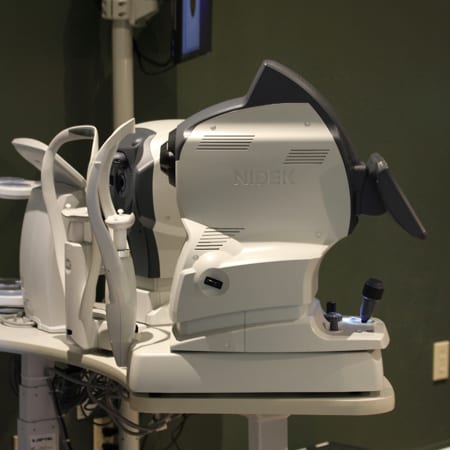

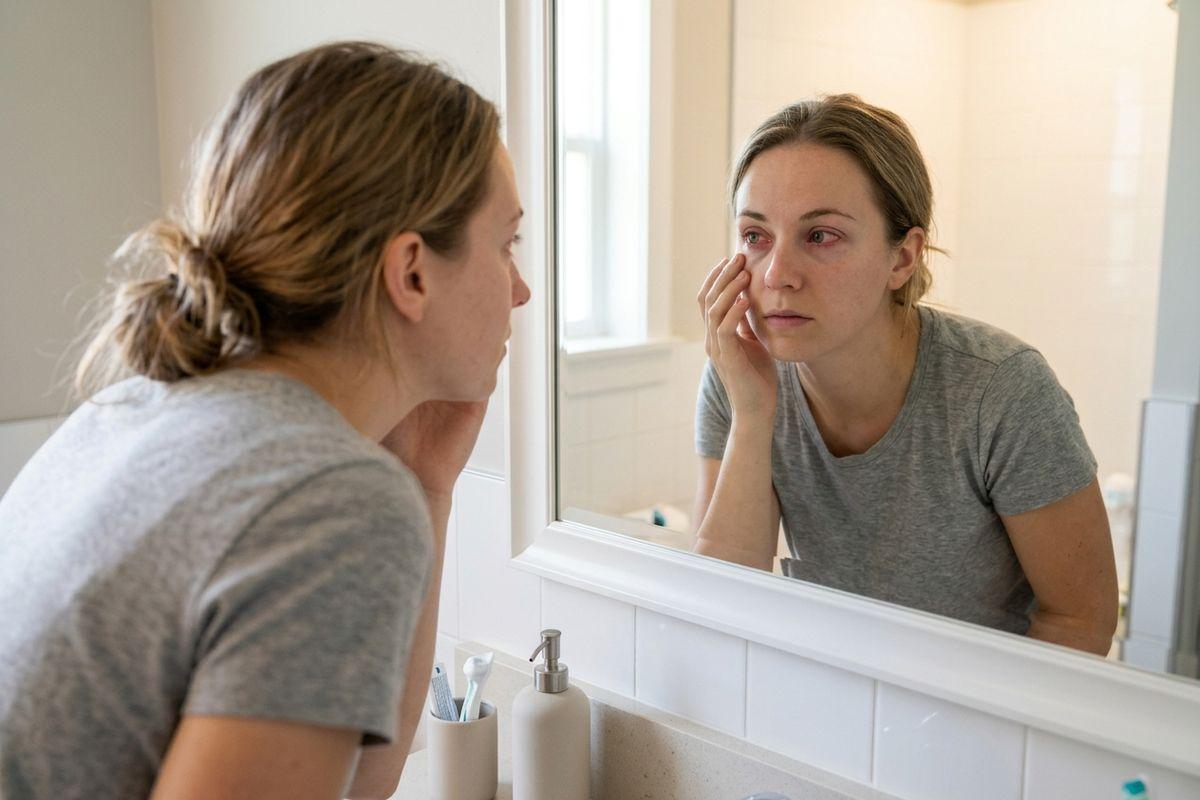
Red, itchy, watery eyes send many people looking for answers, and 2 of the most common causes often get mixed up. Pink eye and eye allergies can look nearly identical in the mirror, especially in the first couple of days.
Pink eye is an infection that spreads from person to person, while eye allergies happen when your immune system reacts to something in your environment. The kind of discharge you’re seeing, how much itching you’re dealing with, and whether 1 eye or both are involved will usually point you in the right direction. Sudden pain or vision changes call for same-day emergency eye care.
What Causes Pink Eye
Conjunctivitis happens when the thin membrane covering the white of your eye becomes inflamed by a virus or bacteria. Viral cases often follow a cold or a sore throat.
Bacterial cases usually trace back to touching your eye after contact with a contaminated surface, and they turn up more often in kids.
It tends to start in 1 eye. The second eye follows within a few days, especially after you’ve rubbed the first one.
What Causes Eye Allergies
Eye allergies work differently. Your immune system treats something harmless, like pollen, pet dander, dust mites, or mould, as a threat and releases histamine, which makes the blood vessels in your eyes swell and itch.
Nothing is infecting you, so you can’t pass anything along. Some people only notice symptoms in spring and late summer. Others deal with them year-round because the trigger lives indoors with them.
Pink Eye Symptoms to Watch For
A handful of signs lean more toward infection than allergies. Keep an eye out for these:
- Thick yellow or green discharge
- Eyelids crusted shut when you wake up
- A gritty feeling, like there’s sand under your lid
- Symptoms that start in 1 eye and move to the other
- A tender, swollen lymph node just in front of your ear
Eye Allergy Symptoms to Watch For
Allergies announce themselves through itch more than anything else. Here’s what usually comes with them:
- Intense itching in both eyes at once
- Clear, watery discharge with no pus
- Puffy, swollen eyelids
- Sneezing, a runny nose, or an itchy throat at the same time
Rubbing helps for a few seconds, then makes everything worse because it releases more histamine into the tissue. Try a cool cloth over closed lids instead.
Is Pink Eye or Eye Allergies Contagious?
Viral and bacterial pink eye spread easily through unwashed hands, shared towels, and pillowcases. Viral cases can stay contagious for 10 to 14 days, which is why so many households pass it around.
Wash your hands often, swap your pillowcase daily, and leave your contact lenses in their case until your optometrist gives you the go-ahead.
Eye allergies can’t travel between people at all. So if 3 people in your home develop symptoms within a week of each other, infection is the more likely explanation.
How Each Condition Is Treated
How to Treat Pink Eye
Treatment depends on the cause, and the 2 types respond to completely different things. Your optometrist can examine your eye under magnification and tell you which one you’re dealing with. In general, here’s what treatment can look like:
- Viral pink eye usually clears on its own in 1 to 2 weeks
- Bacterial pink eye may call for prescription antibiotic drops or ointment
- Cool compresses can ease swelling and irritation
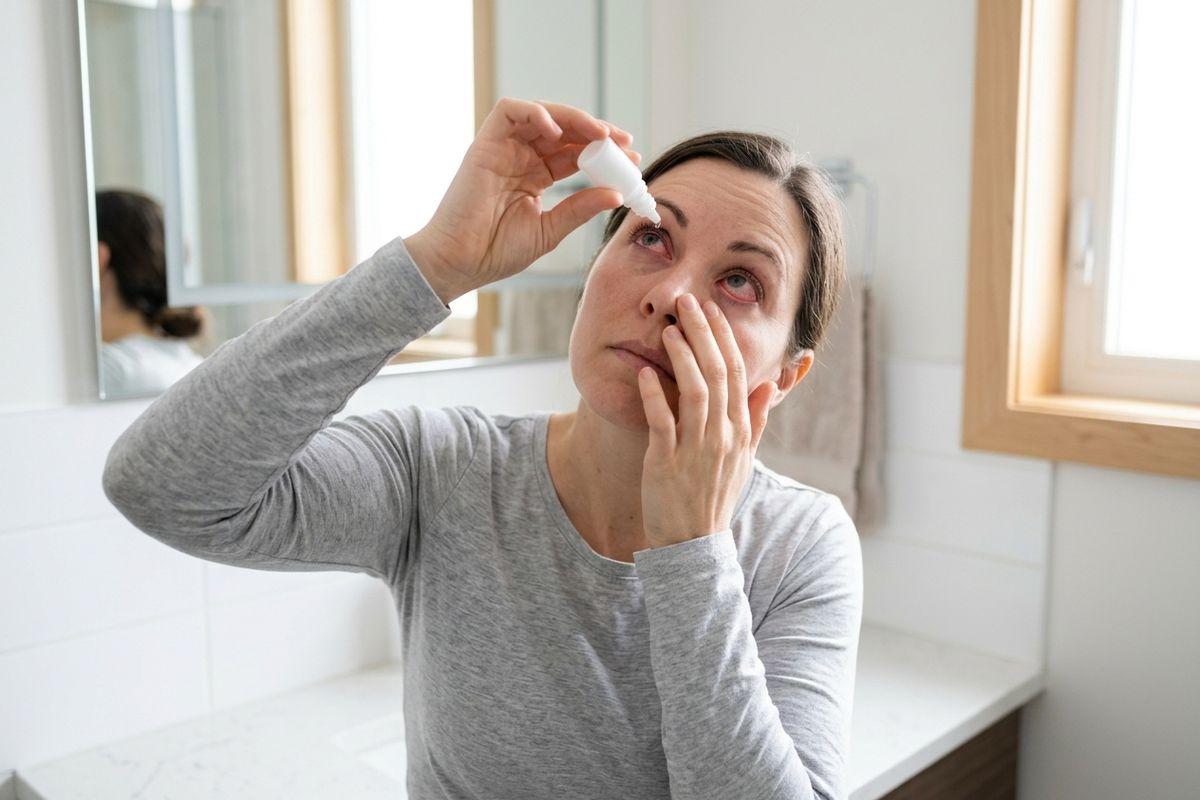
- Artificial tears can rinse the eye and keep it comfortable while it heals
Replace any eye makeup you used in the days before symptoms started, and throw out the contact lenses you were wearing at the time.
How to Relieve Eye Allergies
Start with the trigger. Keep windows closed on high-pollen days and rinse your hair before bed so pollen doesn’t end up on your pillow. A few other things can help:
- A cool compress over closed eyes can settle itching quickly
- Over-the-counter antihistamine drops can reduce redness and itching
- Artificial tears can flush allergens off the surface of your eye
- Prescription drops may be worth discussing when symptoms don’t respond
Contact lens wearers often feel allergy season more sharply, because allergens collect on the lens and sit against the eye all day. Daily disposables can make a noticeable difference.
When to See Your Optometrist About Red Eyes
Plenty of red-eye cases settle down at home. Others need a closer look. Give us a call if you notice any of the following:
- Pain beyond mild irritation
- Blurriness or any change in your vision
- Sensitivity to light
- Symptoms that stick around past a week or keep getting worse
- Thick discharge that returns right after you clean it away
Stop Guessing About Your Red Eyes
At Dorchester Optometry, the team is here to help you sort through symptoms and find a path forward that makes sense for you and your family. Whether it’s a straightforward case or something that needs a closer look, you don’t have to figure it out on your own. Reach out today to book an appointment.